
Consumers’ changing behaviors affect the U. S economy, as reflected in several segments and growth dynamics. Knowledge of such trends is helpful to businesses, governments, and investors who seek to synchronize their activities with consumers’ preferences.
Therefore, the assessment of spending patterns and choice among the consumers enables the identification of shifts within the economic activities. Thus, this analysis aids in establishing the relationship between consumers’ purchasing power and their purchases in terms of the general economic conditions and trends like employment, income, and technology among others.
The interplay between consumer preferences and economic health
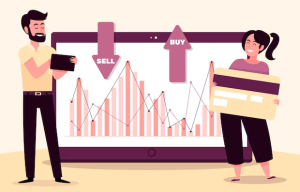
Consumption patterns reflect the position of an economy of a given country in the same way. Mass consumers’ shifts in perception also tend to act as signals of other macro shifts in the economy. For example, the sales by the consumer also depict a sign of growth in the economy since it implies that consumers in the economy have confidence in the economic future and hence spend more.
On the other hand, a negative consumer spending already points to an economic problem such as a recession. Through such trends, economic analysts are able to forecast the performance of an economy and hence the business can be in a position to change its strategies. For this purpose, information on retail sales, consumer confidence indexes, as well as the reports on household expenditure are the primary sources.
Knowledge of the flow of customers ensures that firms or organizations can offer products or services that will meet the needs of the constantly changing market to be competitive. It is also useful in helping lawmakers formulate policies that foster the creation of economic activity and the improvement of consumer utility.
The role of technology in shaping consumer behavior
The various innovations in the technologies considerably assist in changing the trend in the consumers’ behavior. Novelties like electronic commerce, banking by mobile phones, and digital advertisement have transformed the process of consumer operation and relations with brands. All these changes have an effect on the U. S. economy in one way or the other.
For instance, a rise in use of online shopping websites has seen a reduction in the physical shops, hence changing the employment in retail business. Thus, those organizations that cannot change their relationships with customers by incorporating omni-channel concepts and enhancing their Internet presence are more likely to struggle in the digital world.
In addition, consumption behavior is affected by social commerce given that people are using social networks as the source of information on what to buy. It is crucial for the organizations to comprehend how these technological tools influence consumer behavior so that they could employ these platforms as the means of communication with the desired demographics for the business.
Economic implications of demographic shifts
They cause shifts in consumers’ demographics, which creates changes in the economy. Demographic influencers include/are advanced or aging people, people living in urban areas, and evolving family structures, which influence buying patterns and the market.
For instance, the relative proportion of the baby boomer population implies differing consumption patterns as people grow old hence requiring health services and products to plan on retirement. On the other hand, millenials and Generation Z have incorporated experience-based consumption, due to which the markets of the sharing economy and travel have been expanding.
Knowledge of these demographic trends empowers the various businesses as they provide for the respective demography to have the products they desire continuously, hence the importance of business in the market. It also aids policy makers in formulating specific economic policies suitable for intervention front the demographic change impacts and opportunities.
Strategies for businesses to adapt to consumer trends
Any company is always in a state of competition and thus, apart from market forces, it has to continually respond to changes in consumer behavior. This entails that business has to engage in this market vigilance, research and regularly updating, and product diversification.
The locally established enterprises should use data analytics to understand the consumers better and forecast their behavior. Knowledge of the reasons the consumers make such decision can help businesses in development of niche marketing approaches and hence enhance their interactions with the clients.
Others are flexibility and responsiveness as the demands of the market also have to be met. This is because flexibility enables a business to grab opportunities when they exist while avoiding bad situations that may affect it in the course of its operation. Such flexibility is highly valuable in the modern world where the economic environment undergoes transformation at a high pace.
