
These changes in the job market are both very central in matters to do with personal finance. Knowledge of these factors can assist people in coping with the processes taking place in the economy and in improving their financial situation. It is now relevant to look at how the employment trends are likely to affect our financials.
Concerning various shortcomings of empirical literature on the dynamics of employment rates, job stability and wages, the aim of this blog post is going to be considered different chores which reflect in earners’ incomes, expenditures and overall welfare. Thus, considering these aspects, we hope to present data that will be of assistance in decision-making on financial operations.
Impact of employment rates on personal budgets
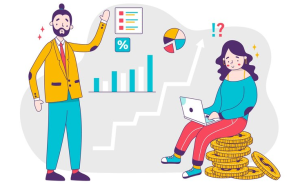
Employment rate is one of the basic measures of economic activity. This is especially the case when employment rates are high, meaning that employees are protected by their employers, and the income is steady. As a result, people are more confident to spend and have more purchasing power hence improves the overall economic status.
Due to uncertainties associated with job insecurity, there could be an increase in the amount saved with a view of having adequate finances in the event of a possible job loss. Though saving is obviously good for the economy, if practiced in large amount, it negatively affects the increase in the gross domestic product because less spending by consumers puts stress on the companies which in turn leads to the loss of job opportunities.
However, there are others factors that strongly determine employment rates, these are government policies and the economic status of the country. For example, stimulus packages, and unemployment benefits may be very useful, giving the people a cushion that can hold them financially during adverse economic periods. Therefore, in order to better manage individual’s finances, there is a need for one to remain vigilant on matters relating to economic policies as well as trends.
Job stability and its financial implications
Another aspect of the life situation, which reflects personal financial situation, is stability of the job. Stable employment means that people can look to the future and set up for the future, which will lead to savings, investment and other big projects like home and other property investments, cars, among others. Thus, without a stable and permanent source of income, long-term financial planning becomes a problem, and people do not want to become tied up in large financial commitments.
Employment stability is also a consideration with reference to credit. Borrowers’ creditworthiness is always considered by the lenders during loan offering, and people with permanent jobs are less likely to defaults. In this regard, a positive credit reference helps people to borrow money at comparatively lower interest charges to meet the financial objectives.
Moreover, the employee benefits including the medical insurance, pension and the leave entitlements are typically associated with job security. Job loss means a loss of these useful bonuses, which puts more pressure on the wallet. Hence, the job security becomes the key to retaining the sound financial positions in general.
Wage growth and its effect on spending power
Personal financial health is directly influenced by the wages as they represent the amount of money earned by an individual. First of all, affected people have more money for discretionary spending with the improvement of their quality of life noted when wages rise. The money is spent on the acquisition of products and services, thus sparking economic growth through circulation of revenues.
However, failure to receive wages increases, wage cuts or even maintaining ones wages at a stand still can be disastrous. When the worth of money in the market drops because the salaries do not increase proportionally with inflation, there is a compromise on the quality of life in families. This may often mean that people take loans to cater for everyday needs thus entailing a debt trap.
Furthermore, the financial inequality is also impacted since wage growth might also vary across employee categories. Some workers may be awarded large wages hikes because of their jobs being in great demand while some may barely experience any change at all if at all their jobs are in low demand. This divergence shows how essential it is to enhance experience and skills as well as respond to new jobs’ requirements.
Coping strategies for economic shifts
Such changes in employment and wages mean that there should be certain changes in the way organisations plan their financial resources. Employing efficient coping mechanisms helps people deal with the vagueness always associated with employment.
First of all, it is essential never to lose an emergency fund. It is useful as a safety net as it ensures that a person has the basic fiscal needs to obtain when they lose a job or when they get a low paying job. Most professional finance gurus advise that households should save up to three to six months of their living expenses, but it is essential to tweak this according to the nature of the worker’s employment and risk tolerance levels.
